Why I Built My Homelab: A Moroccan Tech Enthusiast's Journey

There was a moment when I realized I was paying for services I could host myself. Multiple cloud subscriptions, storage plans, email services—each month felt like throwing money away. But more importantly, I realized something else: I had no control over my own data.
As a Moroccan Tech Enthusiast in a world dominated by foreign tech platforms, the question struck me: What if I could run everything myself?
That question led me down a rabbit hole that transformed not just my work, but my understanding of technology itself.
The Starting Point: Frustration with Cloud Services
Like most, I started by using every cloud service available:
- Google Photos to store all those memorable pictures and videos
- Dropbox for file storage
- Audible for Audiobooks
- Amazon for eBooks but also for the convenience of using Alexa in my Smart Home
- GitHub for code repositories
- And a handful of other SaaS tools
The math was simple: $10/month here, $20/month there, suddenly I was paying over $100/month for services that could theoretically run on hardware I own.
But beyond the cost, there was something else bothering me. These services:
- Collected endless data about my usage
- Could shut down or change their terms anytime
- Were hosted thousands of kilometers away
- Required internet connectivity to function
- Didn't give me a choice about where my data lived
For a Tech Savvy, proud of his Moroccan roots and concerned about data sovereignty, this felt wrong.
The Homelab Awakening
I stumbled upon the concept of a "homelab" while reading about self-hosted applications. The idea was simple but powerful: build a personal infrastructure as a learning playground and productivity tool.
I started small. Researched, a lot, what others had built. Discovered communities of homelabers, developers, techies, and enthusiasts worldwide doing the same thing. Many of them facing similar frustrations about data, control, and cost.
Then I made my first purchase: a tiny used mini PC.
My First Setup: Humble Beginnings
I didn't start with enterprise equipment. I started with what I could afford:
- Server: An old Lenovo Tiny PC M920x from a local marketplace (~2,000 MAD)
- Connectivity: Fiber connection I already had
- Storage: Two 256 GB Nvme Drives
- Software: 100% open-source (Proxmox, Docker, HomeAssistant, Ubuntu and Debian Linux )
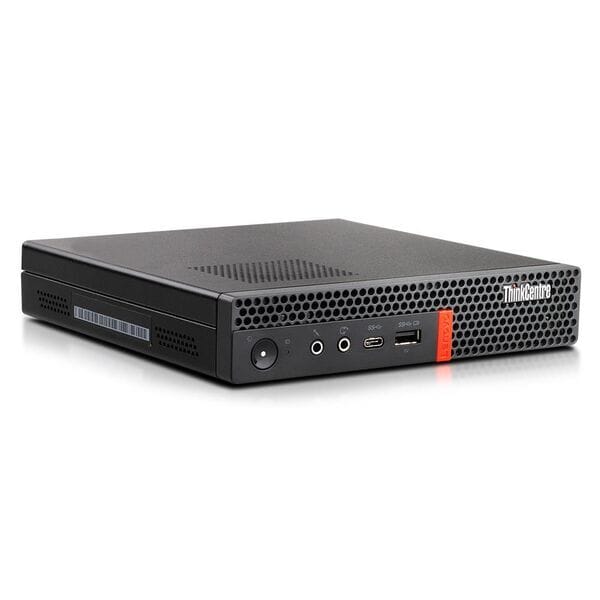
Total initial investment: ~3,000 MAD (~$300 USD)
That might seem expensive, but compare it to what I was already paying annually in subscriptions: 12,000 MAD/year. My homelab paid for itself in 4 months.
What Changed Everything
Setting up that first server taught me more than years of tutorials could. I learned:
1. Real Infrastructure Management
Suddenly, I was thinking about:
- Networking and IP configuration
- Storage redundancy and backups
- Security and access control
- Monitoring and alerting
- Disaster recovery
These skills aren't taught in most programming bootcamps, but they're crucial in the real world.
2. Infrastructure Management Became Real
Running your own infrastructure forces you to learn practices such as :
- Using Docker and containers properly
- Monitoring with Uptimekuma and Grafana
Not as "best practices" you read about, but as actual problems you need to solve to keep things running.
3. The Security Reality Check
When you're responsible for your own security, you stop being careless. You learn:
- How firewalls actually work
- The importance of regular updates
- Why backups aren't optional
- What "defense in depth" really means
4. Problem-Solving Skills
Every day brings a new challenge:
- Why is networking slow today?
- Which service is causing this CPU spike?
- How do I back this up properly?
- Can I add redundancy without breaking everything?
These aren't theoretical problems—they have real consequences and require real solutions.
What My Homelab Runs Today
After 18 months, my setup has grown. It now runs:
- Proxmox - Hypervisor platform where I host all VMs and Containers
- NextCloud - My personal cloud storage and collaboration suite
- Jellyfin - My media server (goodbye expensive streaming subscriptions)
- HomeAssistant - My personal and local Home automation platform
- Vaultwarden - Password manager (secure, private, mine)
- Syncthing - Device sync and backup automation
- Paperless-ngx - Document management
- Monitoring stack - UptimeKuma + Grafana + Portainer
Every single one of these would cost me money on SaaS platforms. Instead, they all run on hardware I own, in a network I control, with data I secure myself.
The Real Benefit? Learning
Here's what surprised me most: The real value isn't the money saved or the data privacy, though both matter.
The real value is this: I've learned more about modern technology in 18 months running my Homelab than I did in 20 years as a Tech Enthusiast using only cloud services.
I understand systems now. Not just write code that uses systems, but actually understand how they work, scale, break, and recover.
That knowledge? makes me more valuable to any employer or client.
Is a Homelab Right for You?
Here's the honest answer: It depends, but probably yes.
You should build a homelab if you:
✅ Want to learn real infrastructure and DevOps
✅ Care about privacy and data sovereignty
✅ Spend significant money on SaaS subscriptions
✅ Enjoy problem-solving and tinkering
✅ Want to experiment with technology without production risk
✅ Are a developer looking to level up your skills
You might want to wait if you:
❌ Just want things to "work" without learning
❌ Don't have a reliable power/internet connection
❌ Don't have physical space for equipment
❌ Have limited time to maintain systems
Note: Many of these concerns can be addressed—even in Morocco's context.
The Moroccan Context
Here's why this matters specifically for Moroccan developers and tech enthusiasts:
- Cost savings are real - What costs $100/month in SaaS might cost $10 in electricity and infrastructure
- Internet reliability is improving - Fiber is becoming more common, making self-hosting viable
- Data sovereignty matters - No need for data to travel abroad for basic services
- Limited access to some services - Some platforms are restricted or expensive; self-hosting solves this
- Learning opportunity - The tech industry needs more infrastructure-savvy Moroccan developers
- Community potential - We can learn and grow together
What's Next?
Over the coming weeks and months, I'll share everything I've learned:
- Step-by-step guides for setting up each service
- Hardware recommendations for different budgets
- Networking essentials explained simply
- Docker and containerization tutorials
- Backup and disaster recovery strategies
- Security best practices for self-hosted systems
- Real troubleshooting stories and solutions
This blog is my way of documenting the journey and helping others take it too.
Your Turn
If you've thought about self-hosting or building a Homelab but weren't sure where to start, this is the beginning.
You don't need expensive equipment or years of experience. You just need curiosity and the willingness to learn.
Next week, we'll start with the basics: How to choose your first server and what you actually need.
Until then, if you have questions or want to share your own homelab journey, drop them in the comments below or join our community Discord.
Welcome to a more sovereign, private, and interesting way of working with technology.
Resources Mentioned
- Proxmox: https://proxmox.com/en/
- NextCloud: https://nextcloud.com/
- Jellyfin: https://jellyfin.org/
- Home Assistant: https://www.home-assistant.io/
- Syncthing: https://syncthing.net/
- Vaultwarden: https://github.com/dani-garcia/vaultwarden
Have you built a Homelab? Or are you thinking about starting? Share your story in the comments below!